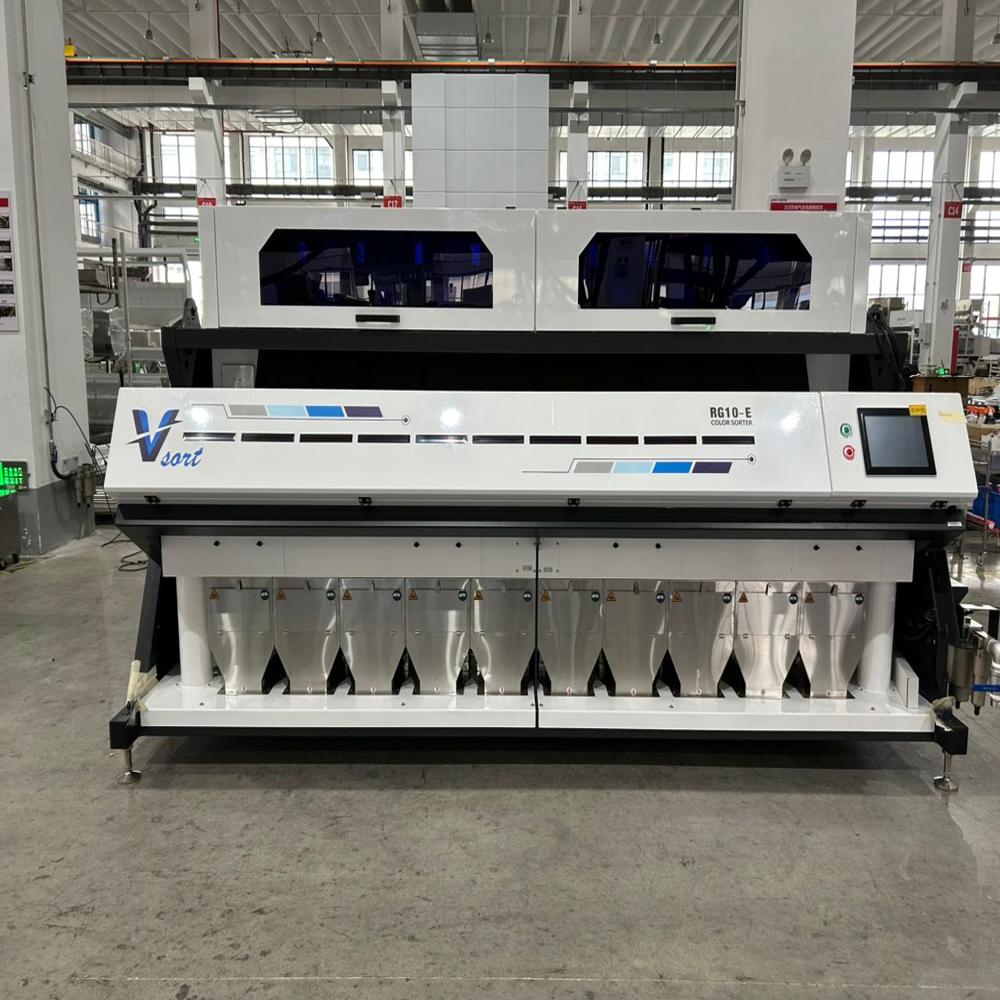
Color Sorter Machines in
2026 have undergone a massive technological shift. The industry has officially transitioned from basic RGB pixel-matching to
Advanced AI Deep Learning and Multidimensional Fusion Modeling. [
1,
2]
The latest breakthrough technologies integrated into modern sorting machines include:
1. AI Deep Learning & Big Data Models
Older machines relied on human technicians to manually set color thresholds. Today's machines feature
built-in neural networks and big data models (such as AMD's KUNPENG system). [
1]
- Self-Learning Algorithms: The machine teaches itself by analyzing millions of grain profiles. It automatically recognizes sub-visual defects like subtle disease spots, micro-cracks, and internal mold without manual programming. [1]
- Shape & Texture Fusion: The AI combines color, shape, texture, and density recognition simultaneously. For example, in a rice mill, it can easily tell the difference between a broken premium grain and a whole low-grade grain based on geometric texture alone. [1, 2]
2. High-Performance Hardware Architecture
- NPU-Powered Computing: Sorter machines now feature dedicated Neural Processing Units (NPUs) on their control boards. This allows the machine to process massive visual datasets at ultra-high frame rates with near-zero latency. [1]
- Area-Array & 5400+ Pixel Cameras: Traditional linear cameras are being replaced by ultra-high-resolution area-array cameras. These capture a complete, multi-angle 3D-like view of the material as it falls, completely eliminating blind spots. [1]
3. Multispectral & Invisible Sorting (InGaAs + UV)
Standard cameras only see what the human eye sees. Modern high-end sorters use InGaAs (Indium Gallium Arsenide) Infrared Technology and Ultraviolet (UV) sensors.
- InGaAs (Short-Wave Infrared): Sorts materials based on their moisture levels and chemical composition. It instantly flags look-alike foreign bodieslike a piece of transparent glass, white plastic, or a stone hiding in a stream of white rice.
- UV Flourescence: Exposes hidden toxins like aflatoxin in peanuts or corn, which glow under UV light but look perfectly normal under regular white light.
4. Smart Cloud Management & Real-Time Tuning
- Cloud IoT Integration: Modern sorters are connected to the cloud. Plant managers can track throughput, sorting purity, and air compressor health in real-time from a mobile app.
- Autonomous Air Balancing: The machine actively monitors its own pneumatic ejector valves. If a valve experiences a pressure drop or a slight timing delay, the intelligent operating system automatically self-calibrates to prevent good grain from dropping into the reject bin




 Send Inquiry


 Send Inquiry
 Send Inquiry
 Send SMS
